
If you're using AI that can understand text, images, audio, video, or documents, you're already interacting with multimodal AI.
Unlike traditional AI systems that may focus on one type of information, multimodal AI can work with multiple types of data together. This makes AI interactions more natural and useful for everything from content creation and education to business research and software development.
In this guide, we'll explain what multimodal AI is, how it works, real-world examples, common uses, benefits, and its limitations.
What Is Multimodal AI?
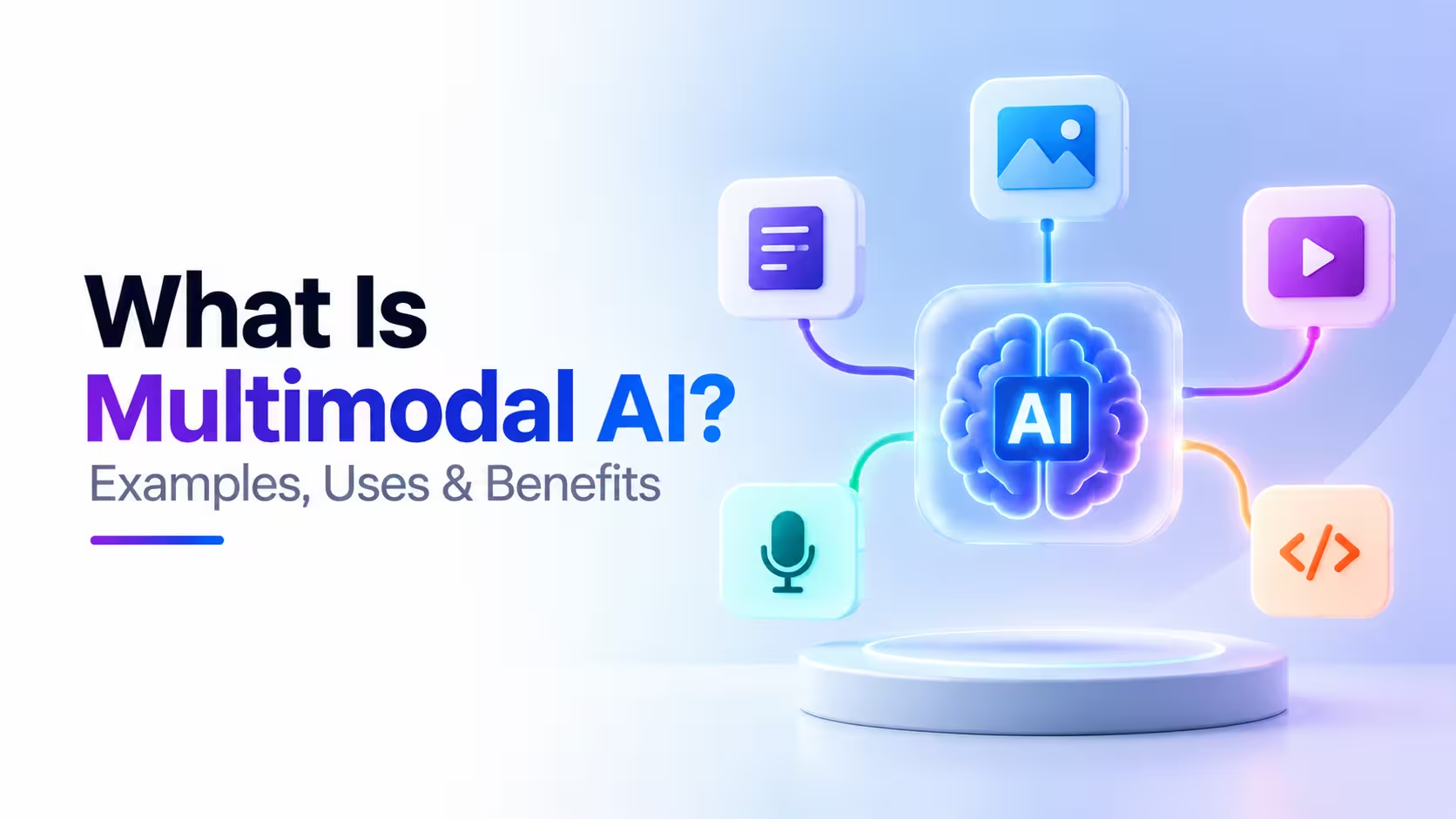
Multimodal AI is artificial intelligence that can understand, process, and sometimes generate more than one type of information, known as a modality. These modalities can include:
- 📝 Text
- 🖼️ Images
- 🎙️ Audio
- 🎥 Video
- 📄 Documents
- 💻 Code
- 📊 Structured data
For example, instead of simply asking an AI a question in text, you could upload a product image, provide a written description, and ask the AI to create marketing content based on both.
That's the key idea behind multimodal AI: different types of information can be understood together rather than separately.
How Does Multimodal AI Work?
At a simple level, a multimodal AI system receives information from different sources and processes the relationships between them. For example:
Image + Text → Understanding → AI Response
You could upload a photo of a chart and ask: "What does this chart tell us?"
The AI needs to understand both the visual information in the chart and the meaning of your written question before generating an answer.
Modern AI systems can combine multiple modalities to support tasks such as image analysis, document understanding, voice conversations, video analysis, and content generation.
Examples of Multimodal AI
Some common examples include:
1. ChatGPT
ChatGPT can work with text and images, analyze uploaded files, generate images, and support voice-based interactions.
For example, you can upload a screenshot of a website and ask the AI to identify design problems or explain what is shown.
2. Google Gemini
Gemini is designed for multimodal understanding across information such as text, images, video, audio, and code.
This can be useful for tasks like analyzing videos, understanding documents, studying visual material, or combining different sources of information.
3. AI Image Understanding
Multimodal AI can examine an image and answer questions about it. For example:
- "Describe this product."
- "What's wrong with this design?"
- "Read the information in this image."
- "Explain this diagram."
4. AI Voice Assistants
Voice-based AI combines speech recognition, language understanding, and voice generation to create more natural conversations.
Instead of typing everything, users can simply speak to the AI and receive a spoken response.
Common Uses of Multimodal AI
Multimodal AI is being used across many industries.
Education
Students can upload textbooks, notes, diagrams, mathematical problems, and presentations. AI can then explain the material using multiple types of information.
Marketing
Marketing teams can use multimodal AI to analyze images, create campaigns, write copy, generate visuals, and review videos.
For example, a marketer could provide a product photo and ask AI to create product descriptions, social media captions, ad copy, email content, and blog ideas.
Ecommerce
Multimodal AI can help online stores understand product images and descriptions together. Potential applications include product categorization, image-based search, product descriptions, visual recommendations, and customer support.
Customer Support
Customers can send screenshots, documents, images, or voice messages instead of explaining everything through text. AI can analyze the information and help identify the problem.
Software Development
Developers can provide code, screenshots, error messages, and written instructions in the same conversation. This can make debugging and explaining technical problems much easier.
Benefits of Multimodal AI
- Better Understanding: Combining different types of information can give AI more context than text alone.
- More Natural Interaction: People communicate through speech, images, gestures, text, and other forms of information. Multimodal AI makes AI interaction closer to that experience.
- Less Manual Work: AI can analyze documents, images, audio, and other information without requiring users to convert everything into text first.
- More Useful Automation: Businesses can combine different data sources to automate workflows that would otherwise require several separate tools.
- Improved Accessibility: Voice, image, and text capabilities can make digital tools easier to use for people with different needs and communication preferences.
Multimodal AI vs Generative AI
These terms are related but don't mean exactly the same thing.
| Multimodal AI | Generative AI |
|---|---|
| Works with multiple types of information | Focuses on generating content |
| Can understand text, images, audio, video, etc. | Can generate text, images, audio, video, etc. |
| Focuses heavily on combining modalities | Focuses heavily on content creation |
| Can analyze existing information | Can create new information |
A system can be both multimodal and generative.
Limitations of Multimodal AI
Multimodal AI is powerful, but it isn't perfect. It can sometimes:
- Misinterpret images
- Make mistakes when reading charts or documents
- Misunderstand audio
- Produce incorrect information
- Miss important visual details
- Raise privacy concerns when processing sensitive information
For important decisions, AI-generated results should still be reviewed by a person.
The Future of Multimodal AI
Multimodal AI is moving toward more natural interactions where users don't have to think about which format to use. You might simply show, say, type, or upload something, and the AI can determine how to process it.
This could make AI more useful across areas such as education, business, customer service, healthcare, robotics, content creation, and software development.
Frequently Asked Questions
What is multimodal AI in simple words?
Multimodal AI is AI that can understand and work with different types of information, such as text, images, audio, and video.
Is ChatGPT multimodal AI?
Yes. Modern versions of ChatGPT support multiple modalities, including text, images, files, and voice-related interactions.
What are examples of multimodal AI?
Examples include ChatGPT and Google Gemini, along with AI systems that combine text, images, audio, video, or other data types.
What is the main benefit of multimodal AI?
The main benefit is the ability to combine different types of information, giving AI more context for understanding and completing tasks.
Is multimodal AI the same as generative AI?
No. Multimodal AI describes the types of information an AI can work with, while generative AI describes AI that creates new content. A system can be both.
Final Thoughts
Multimodal AI is changing how people interact with artificial intelligence. Instead of limiting conversations to text, AI can increasingly understand images, audio, video, documents, and other forms of information.
For businesses, creators, developers, and everyday users, this means AI can become more flexible and useful across a much wider range of tasks.
As multimodal models continue to improve, the line between communicating with AI and simply showing it what you mean may become increasingly small.
Want to explore more of what's next in AI?
At Aivellow, we're following these developments closely and helping users discover AI tools across productivity, marketing, coding, content creation, research, automation, and more. Check out our What Are AI Agents guide, our AI Trends to Watch in 2026, and our full Top 25 Best AI Tools in 2026 guide. See our ChatGPT vs Claude vs Gemini comparison, browse 20 AI Tools That Will Save You 10+ Hours Every Week, our Top AI Productivity Tools, Best AI Marketing Tools, and 15 Best AI Coding Assistants guides. Explore more by category, submit a tool we should feature, or get in touch if you have questions.